

Build vs. Buy: Off-the-Shelf Governance Tools
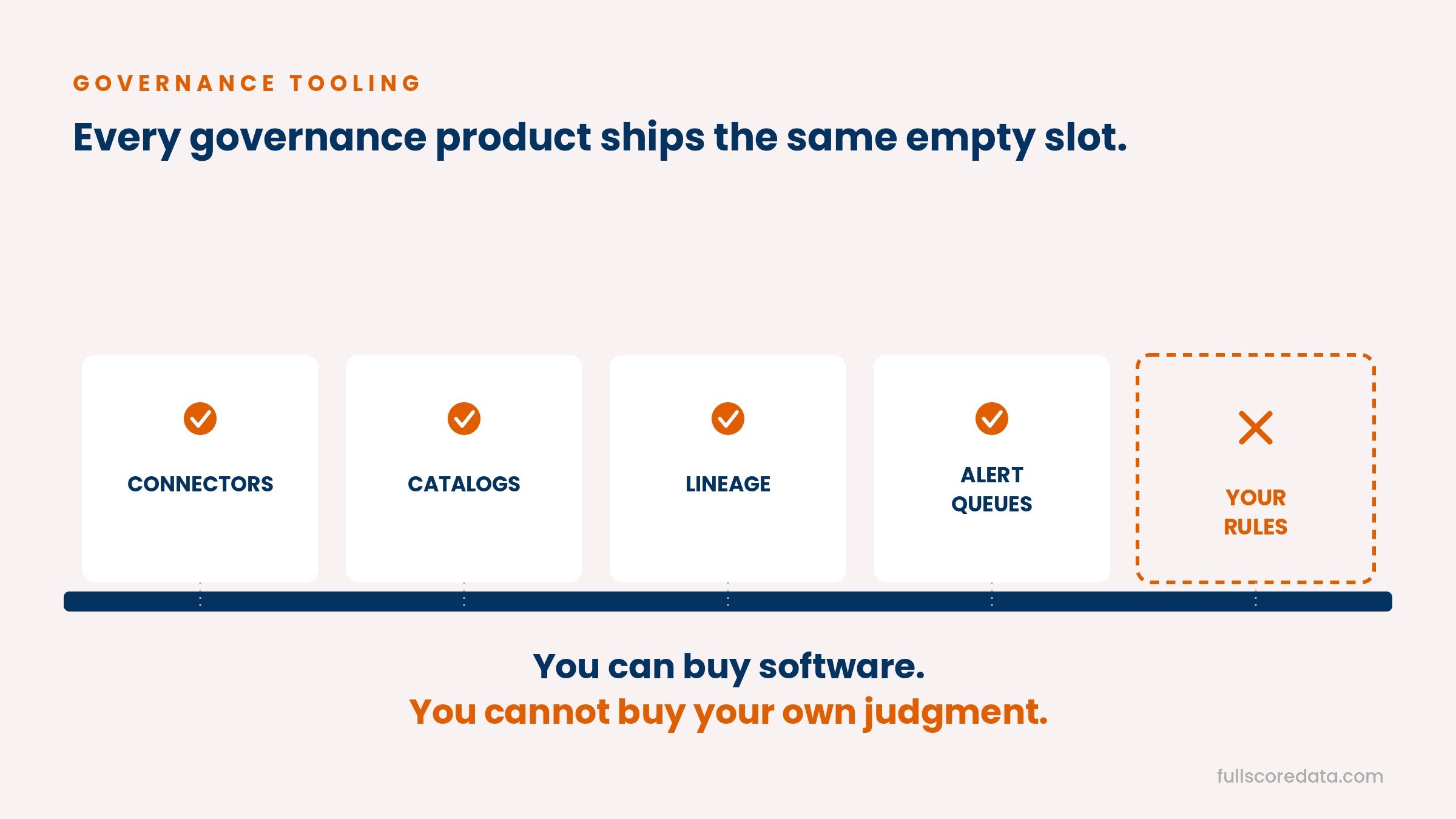
Every governance tool has the same empty slot: the place where your rules go. Which customer record is real, what revenue means, what happens when systems disagree — a product can host those answers, but it cannot contain them. Buy the plumbing. Build the judgment. Own it.
MCP Solved the Integration Problem. Now the Data Problem Is Exposed.
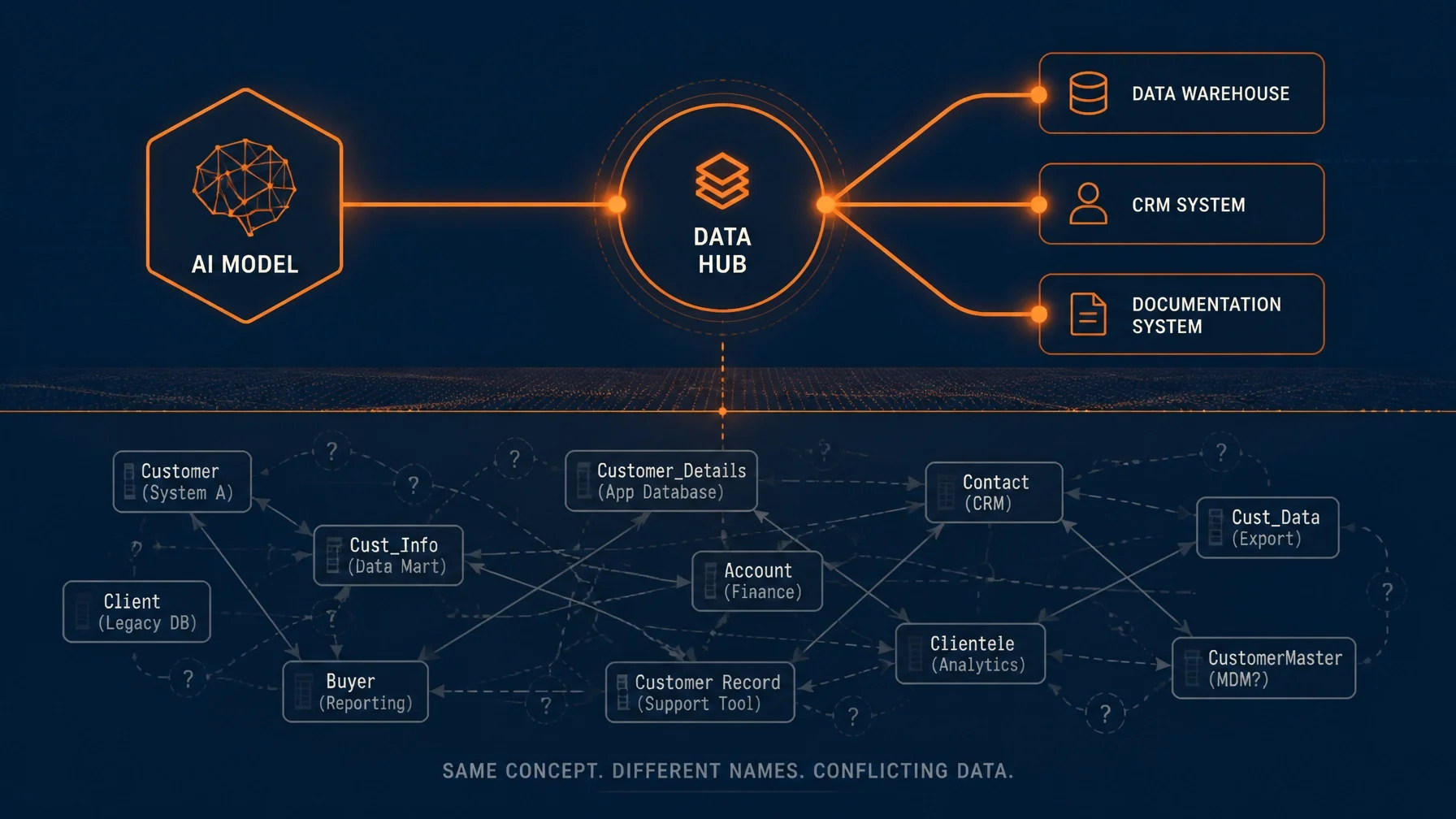
The Model Context Protocol turned connecting an AI to your internal systems from a build into a configuration step. The interesting consequence is that the bottleneck didn't disappear: it moved from "can we connect the AI to our data" to "is our data modeled well enough that an AI connecting to it produces something trustworthy."

The Toolkit vs. The Product
Here's the honest version of who we are right now: not a product company, not yet, and not pretending otherwise. What we sell today is a discipline, and a small senior team that knows how to apply it.
There's a specific way to tell whether a system is actually well-built, and it isn't how sophisticated it looks in a demo. It's how many people it takes to keep running. In one recent engagement, two different teams tried to hold together an ungoverned reporting operation: first an offshore team, then a US-based team brought in at roughly four times the cost. More hands didn't fix it, because headcount was never the actual constraint. A small senior team, working on the architecture itself, fixed what two larger teams couldn't.
That reframes what our own size means. It isn't a caveat to get past before someone trusts us with real work. It's the shape of firm that can make this argument honestly, because when the hard questions are already answered underneath, anyone in a client's organization can ask their own question directly instead of waiting on a data team. That was the bet from the beginning: the right constraint, placed in the right spot, doesn't slow anyone down. It's what finally lets everyone move.

Operating Models, Not Dashboards
Every data vendor will show you a dashboard. Fewer will tell you the truth about what a dashboard actually is: a symptom. It's the visible proof that, somewhere upstream, someone had a question they couldn't answer themselves. You can't decorate your way out of a structural problem.
One recent engagement centered on a private equity firm's largest recurring deliverable: a twice-yearly, 150-page portfolio review that consumed roughly 15,120 hours a year to produce. After building an actual governed spine underneath the reporting, that number fell to 756 hours, and the most recent cycle went out with zero change requests, the first time in the firm's history.
Hours saved is the easy headline, but it's not the point. What that reclaimed time gets converted into is capacity: for one firm, freeing up 800 hours a quarter across ten investment teams worked out to roughly four additional deals' worth of diligence capacity a quarter, opportunities that wouldn't have gotten a serious look otherwise. That capacity doesn't disappear after the first quarter, either. It's there again next quarter, and the quarter after that, for as long as the constraint stays gone.

Information → Intelligence → Governance
AI doesn't fail the way software used to. A broken pipeline throws an error. AI just answers with the same confident tone, whether it's right or wrong, and there's no error message that tells the two apart.
That changes what trusting AI actually means. It's not a question about the model. It's a question about who is actually positioned to check its work. In the story that opened this series, that was one person, but the same pattern shows up just as often at the level of a data team, a business unit, or a company you just acquired. Human in the loop is only a safeguard if the human actually owns the truth being checked, and most of the time, they don't.
The fix isn't a stricter approval gate or a second AI grading the first one. It's encoding the truth up front, so the knowledge trapped inside one person, one team, or one acquired company doesn't have to be re-earned by everyone else, every time.
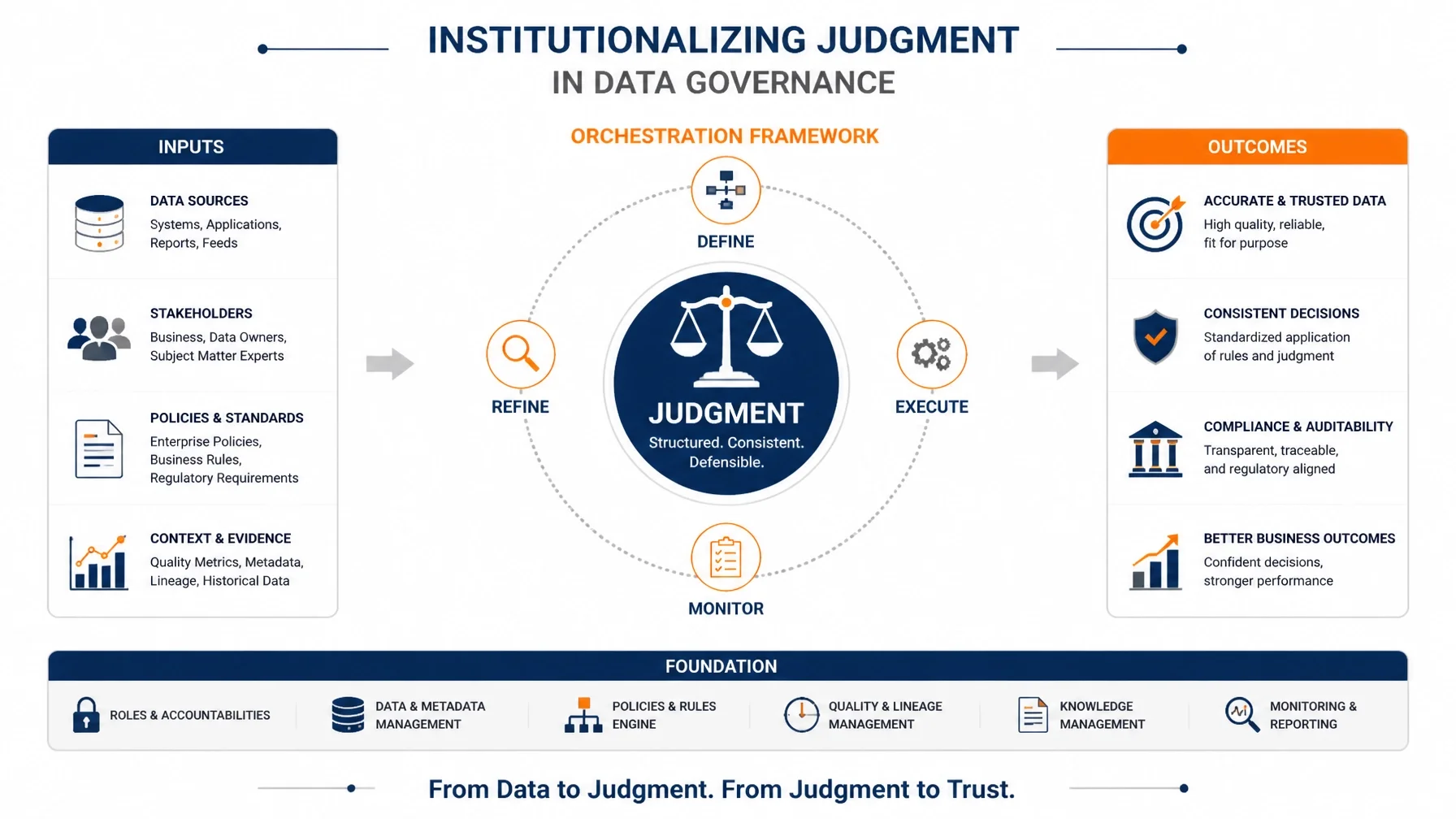
Institutionalizing Judgment - The Method
“Building without guardrails is like putting the fence at the bottom of the cliff. Institutionalizing judgment means encoding the rules before the first line of code is written.”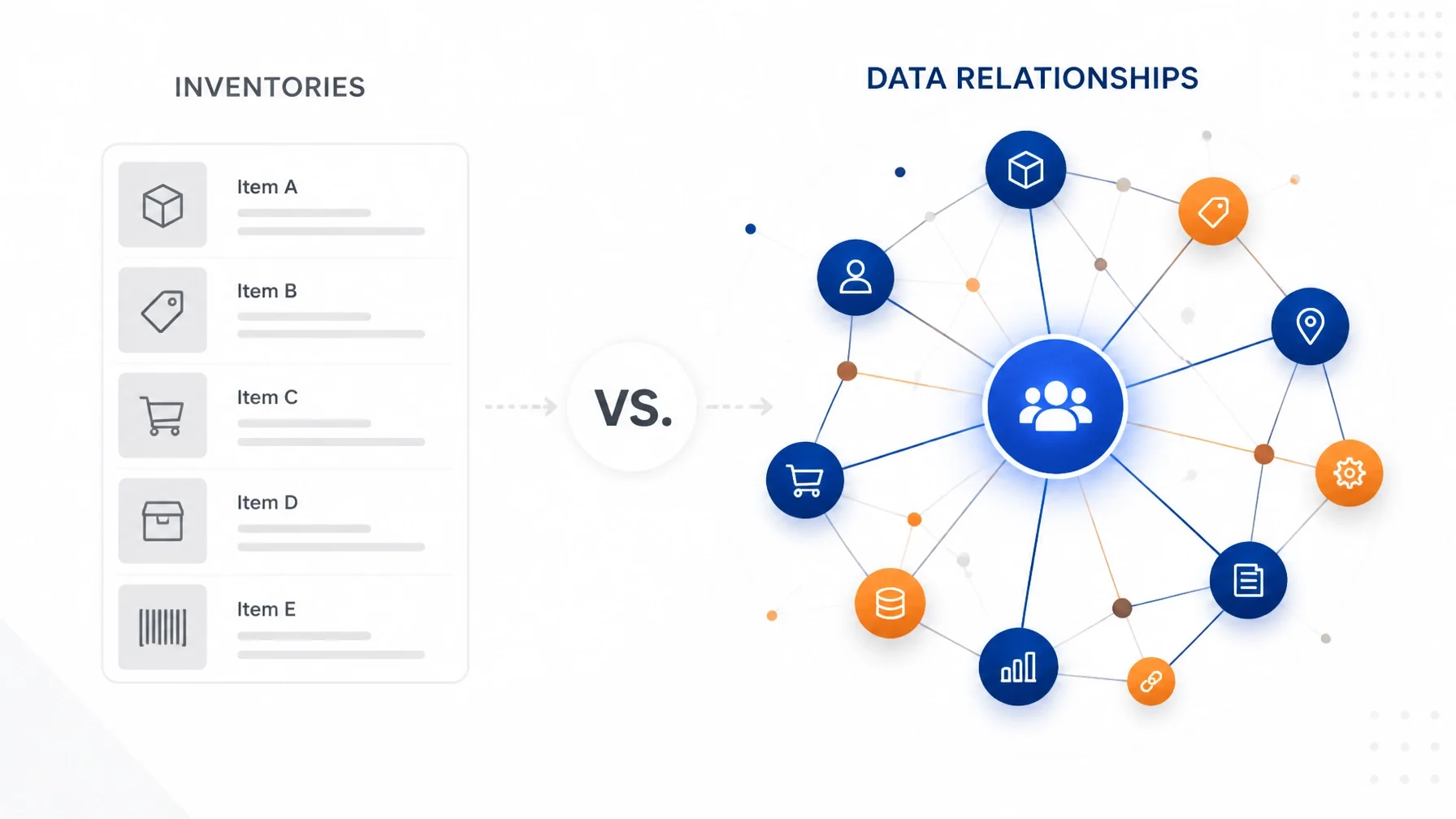
Relationships Over Inventories
Static inventories record items, but they don't reconcile relationships. When your data estate is full of accurate lists that don't know how they connect, you aren't building clarity—you're building isolated silos. Stop building a better list. Build the graph that already knows.


Wrapping Up: What I’ve Learned About AI (So Far)
AI For The Rest of Us: Part 10
AI is both simpler and more complicated than most people think.
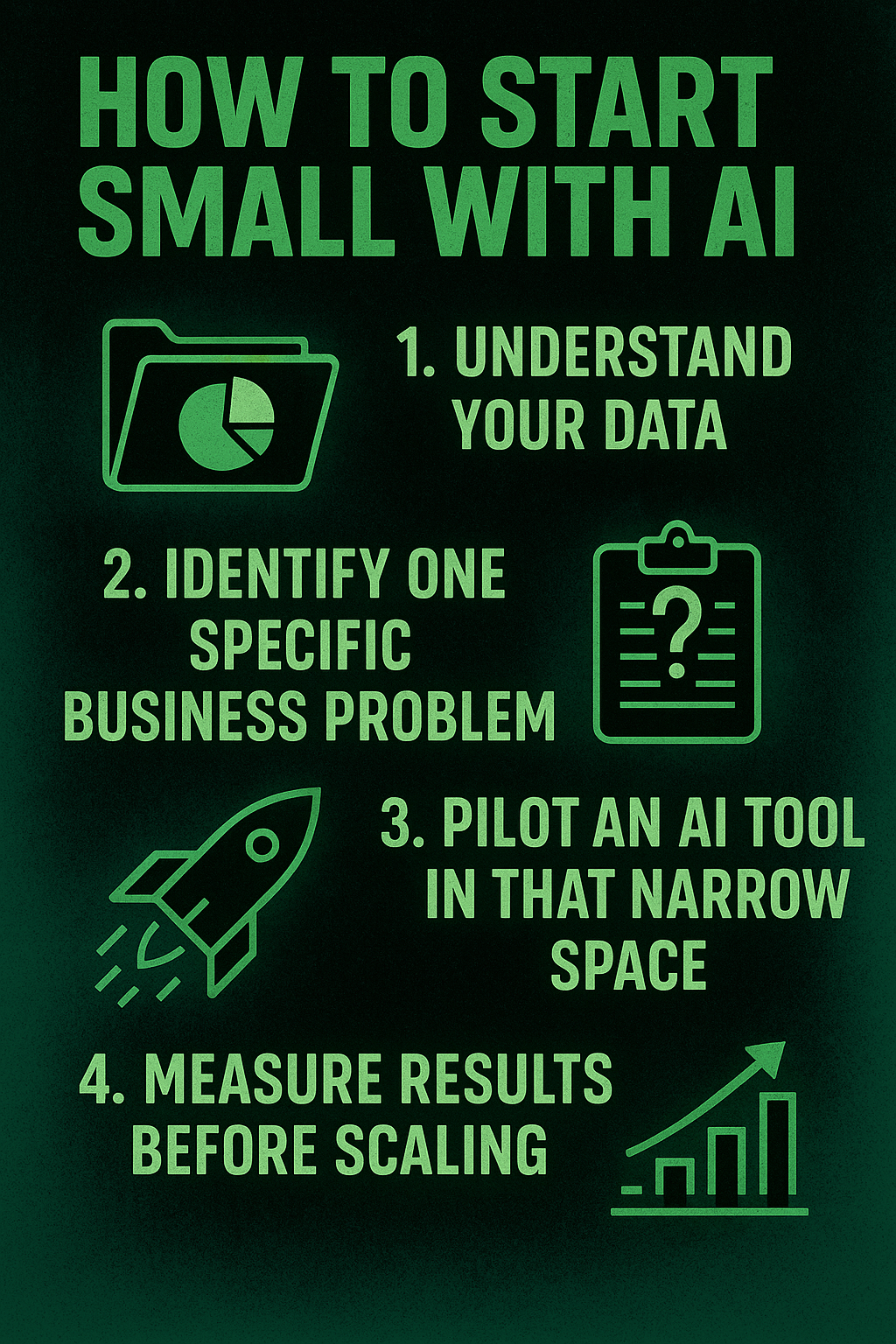
How To Start Small With AI
AI For The Rest of Us: Part 9
You don’t need to solve AI. You just need to get curious — and start small.

The Responsible Use of AI
AI For The Rest of Us: Part 8
One of the biggest dangers in AI isn’t the technology itself — it’s over reliance.

Strategy Before Shiny Objects
AI For The Rest of Us: Part 7
Buying or building shiny tech without a strategy is expensive theater.
The AI Effect: Why We Stop Calling It AI
AI For The Rest of Us: Part 6
Here’s a funny thing about artificial intelligence: the moment it works, we stop calling it AI.

Where AI Can Actually Help
AI For The Rest of Us: Part 5
Where does AI actually belong in business, and where doesn’t it?
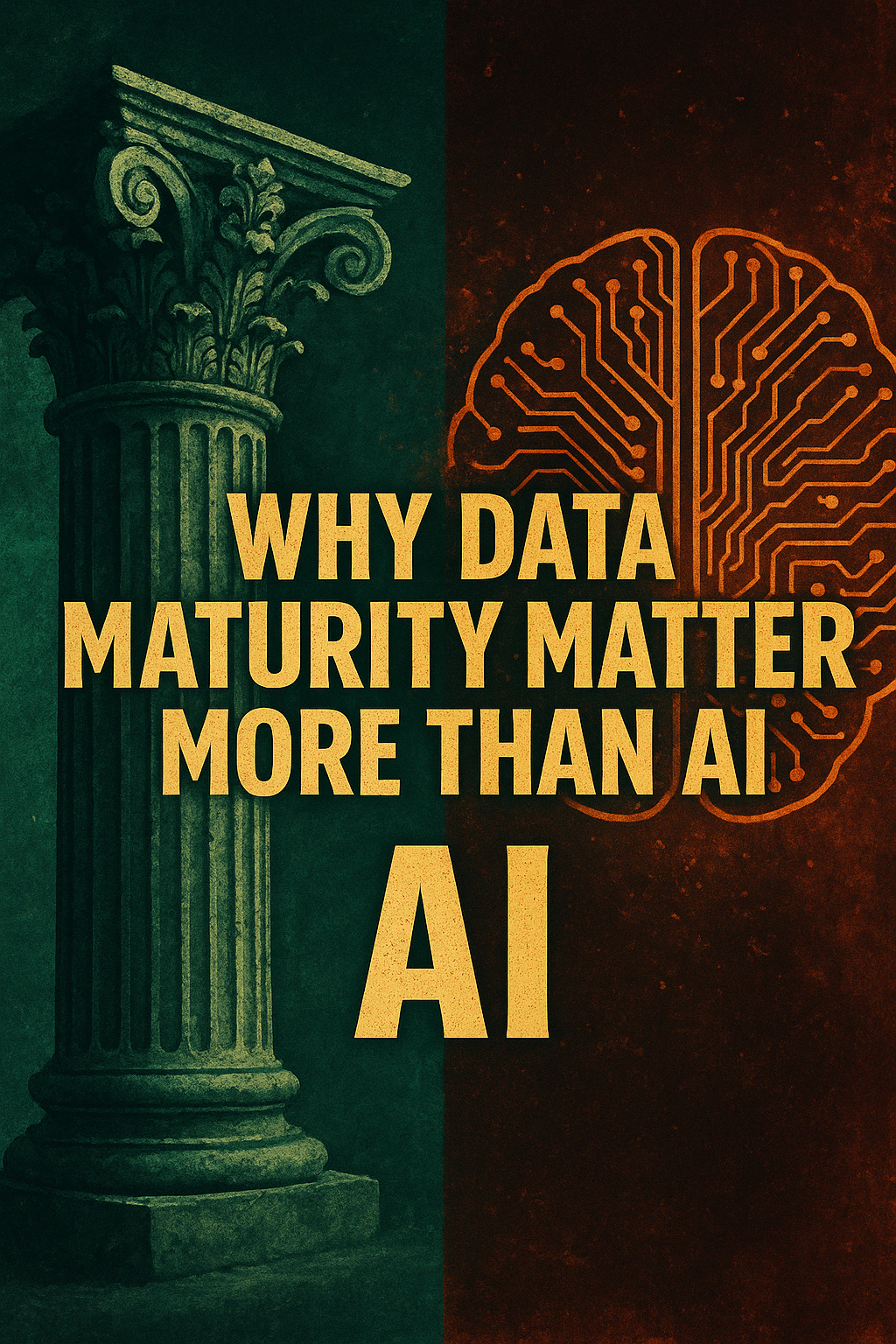
Why Data Maturity Matters More Than AI
AI For The Rest of Us: Part 3
If your organization isn’t mature in how it manages and uses data, AI will likely disappoint you.

The Myth of The Magic Box
AI For The Rest of Us: Part 2
Everywhere you look, AI is being sold as the new frontier

What AI is (and what it isn’t)
AI For The Rest of Us: Part 1
While inspired by the human brain, AI is not that same, and it doesn’t “think” the way humans do.