
Relationships Over Inventories
Beyond the Data Catalog: Why Your Strategy Fails Without a Relationship Graph
The Résumé That Didn't Get Him Hired
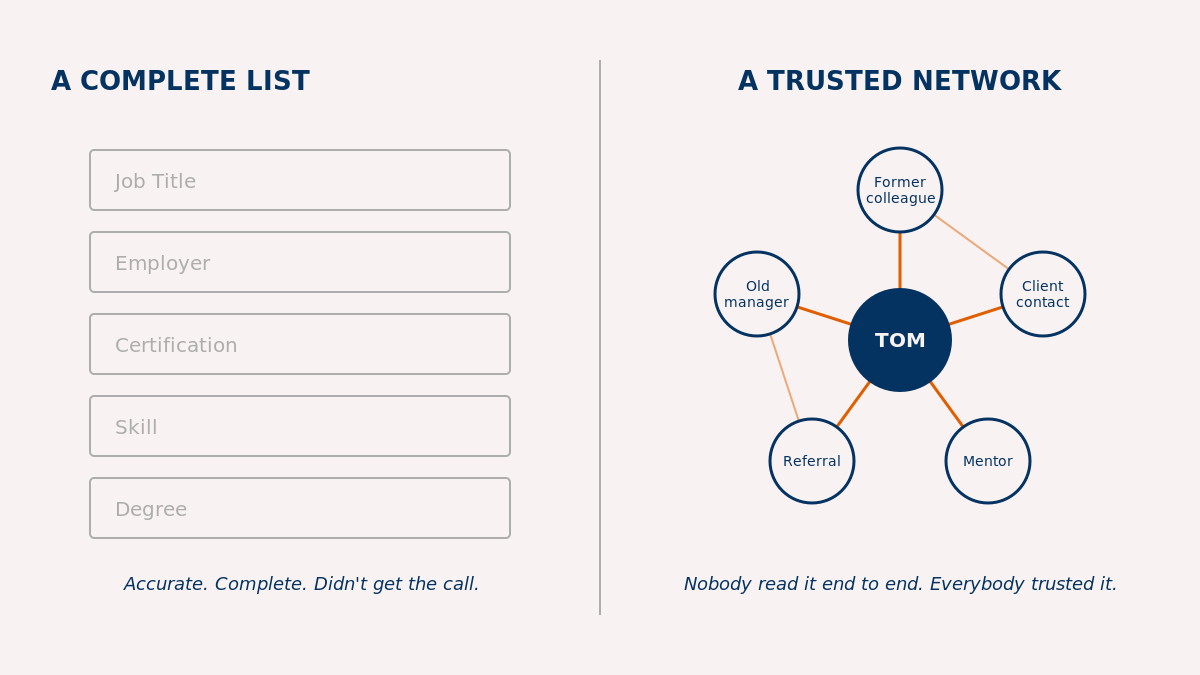
A few years ago, Tom was laid off. It happens to the best of us. He did what you're supposed to do: he updated his résumé. Every job, every title, every certification, a complete, accurate inventory of everything he'd done. It didn't get him his next role…
What worked was smaller, harder to quantify, and as old as time; Networking. A handful of people knew specific things about how Tom actually worked, and were willing to pick up the phone and vouch for him. Nobody read the résumé end to end. What mattered was the network around it — who knew what, and who trusted whom enough to make an introduction. The résumé was a complete list. The thing that actually got him hired was a network of relationships.
That's an odd thing to notice at a low point in a career. But it's the exact problem Tom has found over and over, inside and outside of data organizations.
Every Vendor Sells an Inventory
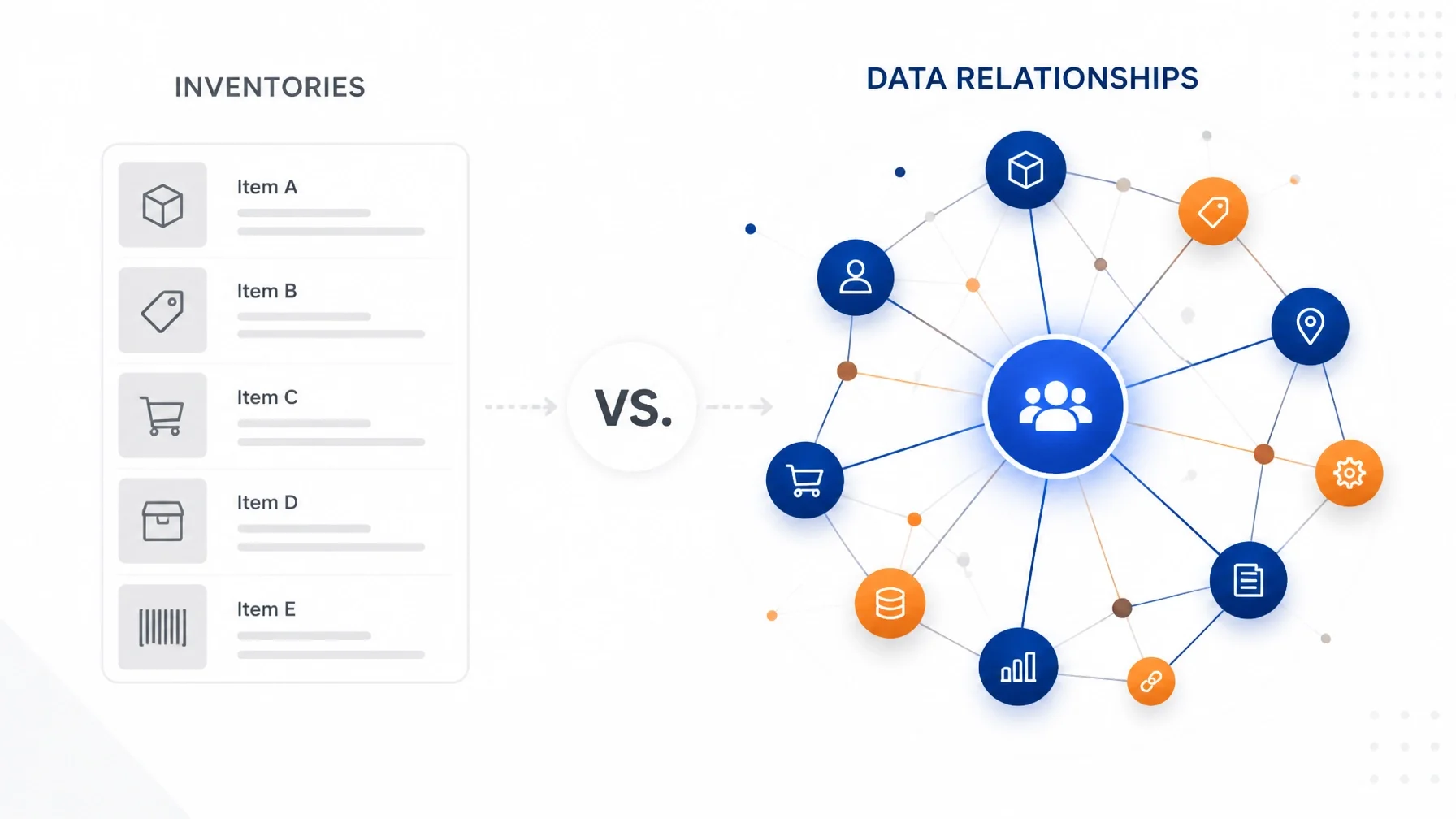
Most products begin with inventory. A data catalog is a compilation of inventory of tables. A glossary is an inventory of terms. An asset list is an inventory of dashboards, reports, and models. Each one is genuinely good at describing itself. Ask a catalog what tables exist, and it'll tell you accurately. But ask it whether the customer in the CRM is the same customer sitting in the billing system or sitting in front of you, and it goes silent or confidently answers incorrectly. That isn't a fact about any single table, catalog, or dashboard. It's a fact about the relationship between them, and an inventory doesn't reconcile relationships. It only records items.
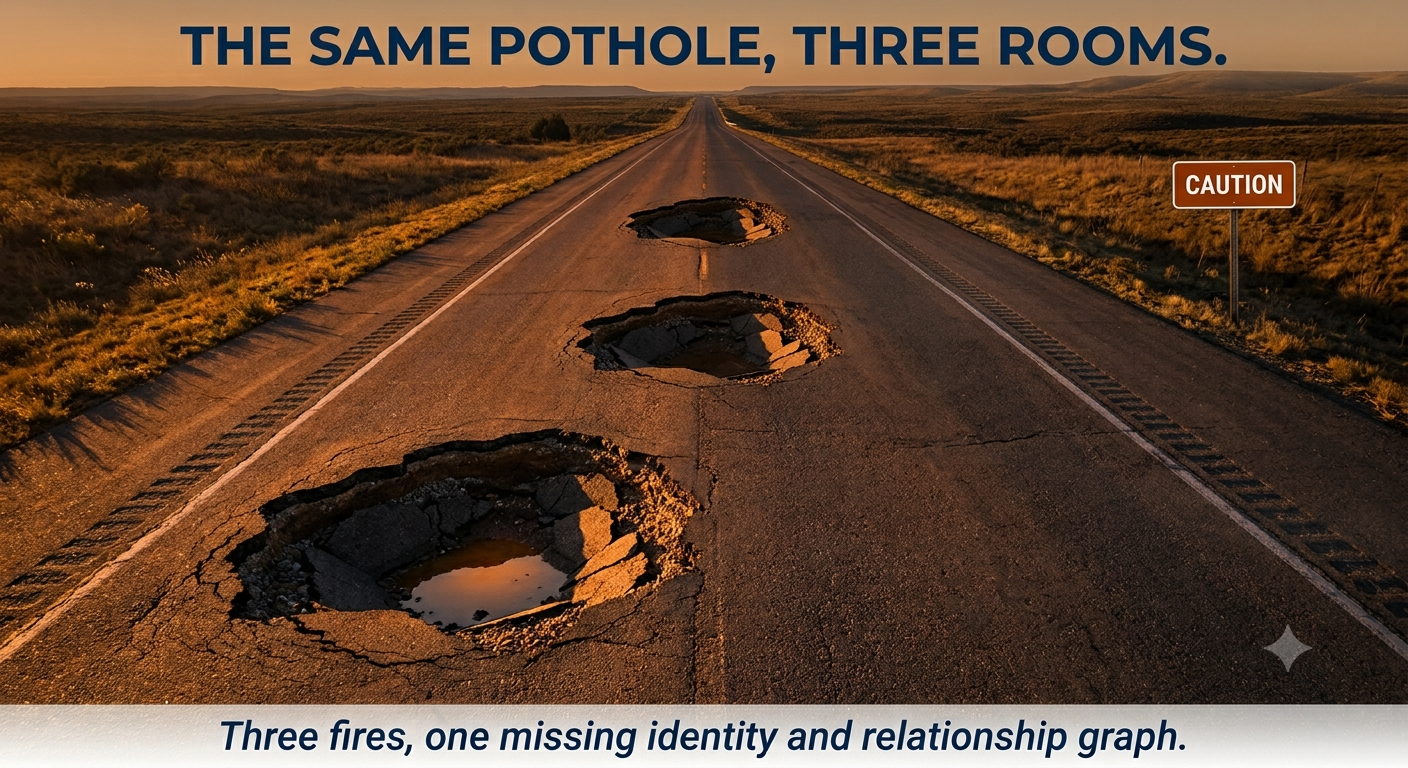
That gap isn't a rounding error. It's the same pothole every data org keeps hitting, patching over, and hitting again: the number that doesn't match between two reports, the reconciliation that eats three people and two days every month, the AI answer that reads completely confident and is quietly wrong. From inside the organization, these look like a dozen separate fires, each with its own workaround. They're all the same fire. It just keeps breaking through different floors of the building — not a missing table, not a missing definition, but a missing identity and relationship graph. The thing that would say, once, that this and that are the same thing, so nobody has to figure it out again under deadline pressure.
This is the assumption our industry keeps making. Governance products in this category are almost always sold as better inventories — faster to search, better documented, nicer to look at. None of that answers the question a data organization actually needs answered. That question was never "what do we have." It was always "how does what we have actually connect."
We Don't Build a Better List. We Build the Graph.
Your data estate has the same problem your résumé did. It's full of accurate, well-maintained lists that don't know how they relate to each other.
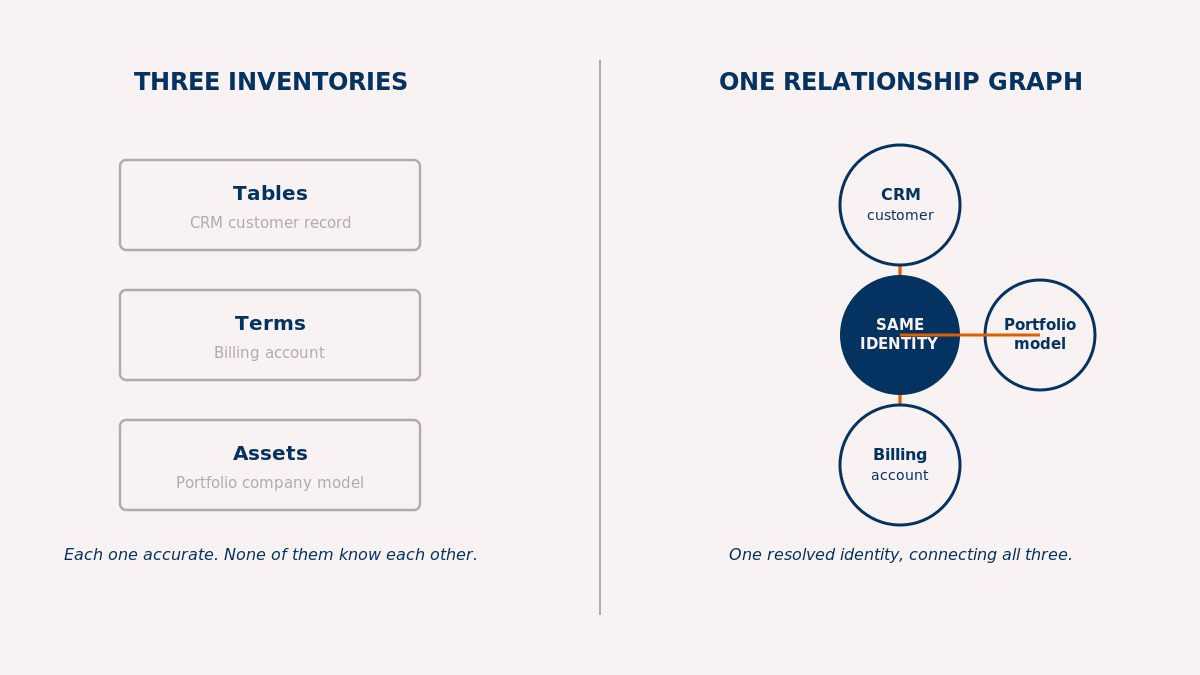
We don't build a better list. We build the graph that already knows — and we don't get discouraged doing the messy work of connecting it.