

Information → Intelligence → Governance

Core Narrative Element
Why now : the AI argument. Fourth post in the six-part FSDS content series (Creativity Through Constraint → Relationships Over Inventories → Institutionalizing Judgment → Information → Intelligence → Governance → Operating Models, Not Dashboards → The Toolkit vs. The Product).
Understanding AI Failure Modes
AI doesn't fail the way software used to fail. A broken pipeline throws an error. A bad join produces a result so obviously wrong someone notices immediately. AI does neither. It answers with the same confident response, whether that answer is right or wrong, and there is no error message that tells the two apart. That's not a bug waiting on the next model release. It's almost a structural property of what these systems do : which means the question of whether to trust an AI's output stops being a question about the AI, and becomes a question about who is actually positioned to check it.
Why AI Fails Silently: The Illusion of Confident Output
AI doesn't fail the way software used to fail. A broken pipeline throws an error. A bad join produces a result so obviously wrong someone notices immediately. AI does neither. It answers with the same confident response, whether that answer is right or wrong, and there is no error message that tells the two apart. That's not a bug waiting on the next model release. It's almost a structural property of what these systems do : which means the question of whether to trust an AI's output stops being a question about the AI, and becomes a question about who is actually positioned to check it.
Why AI Fails Silently: The Illusion of Confident Output
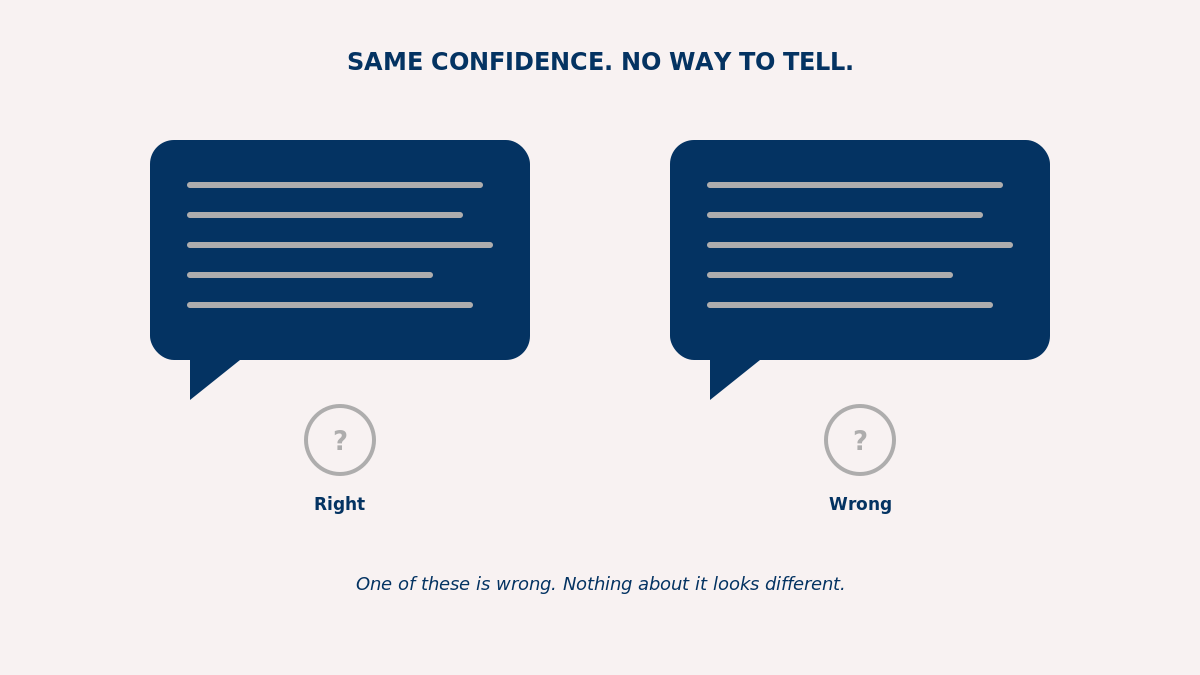
And checking it requires domain knowledge that often lives in exactly one place. In the story that opened this series, that place was one person: the one who could catch what was wrong had built the underlying data himself. But the pattern isn't really about that one person, or about key-person risk. Just as often, the context belongs to one data team, one functional team, one business unit, or one acquired company, and everyone outside that group ends up verifying against a truth they were never given. This isn't a key-person dependency problem. It's institutional knowledge trapped inside a person or group instead of being made available to the rest of the organization.
The Myth of "Human in the Loop" and Verification Privilege
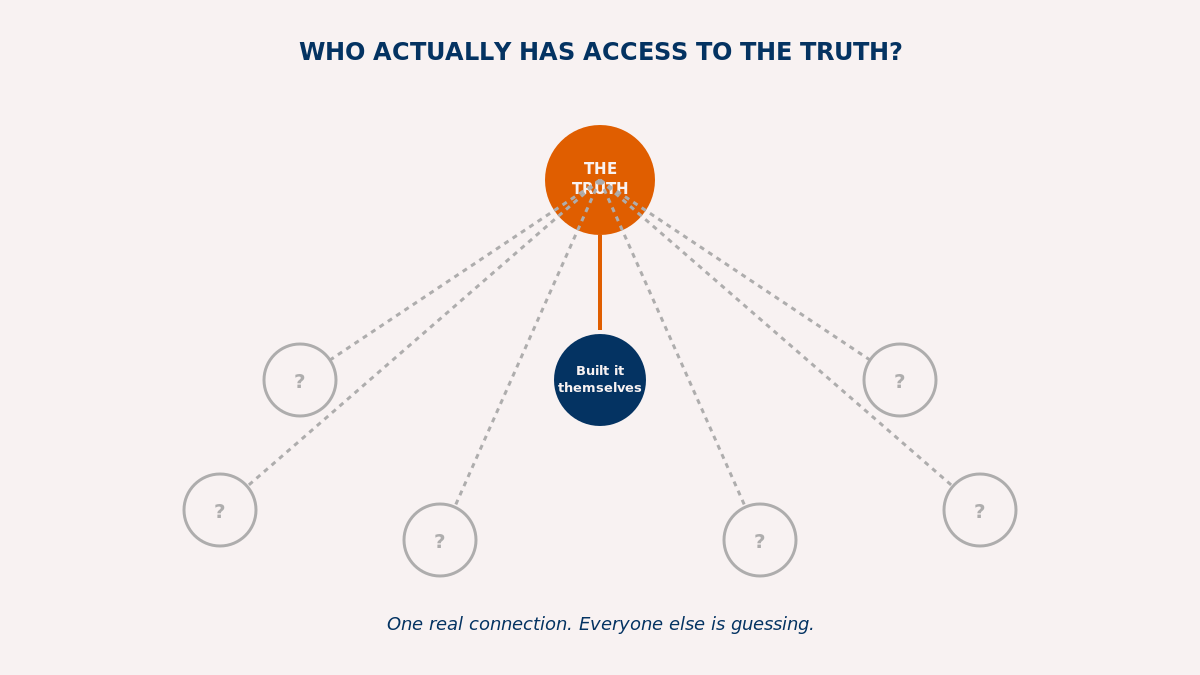
"Human in the loop" sounds like a safeguard. In practice, it's only a safeguard if the human, team, or business unit in the loop actually owns the truth being checked. Usually, they don't. The reviewer can be one of dozens across an organization, or sit in a different business unit or a recently acquired company entirely, checking outputs against sources they don't fully control and definitions someone else wrote. So the loop doesn't catch the error. It rubber-stamps it, at AI light speed… a strictly worse situation than the slow manual process it replaced. At least the manual process forced multiple sets of eyes on it and was slow enough that someone occasionally asked a question before it shipped.
Verification isn't a feature you can bolt on after the fact. It's a privilege, and right now, almost nobody has it.
The fix was never to check harder downstream : a better reviewer, a stricter approval gate, a second AI grading the first one. It's to encode the truth up front, so the knowledge currently trapped inside one person, one team, or one acquired company doesn't have to be re-earned by everyone else, every time. Institutionalize it once, and everyone downstream inherits it instead of individually acquiring it.
How Speed Accelerates Data Entropy
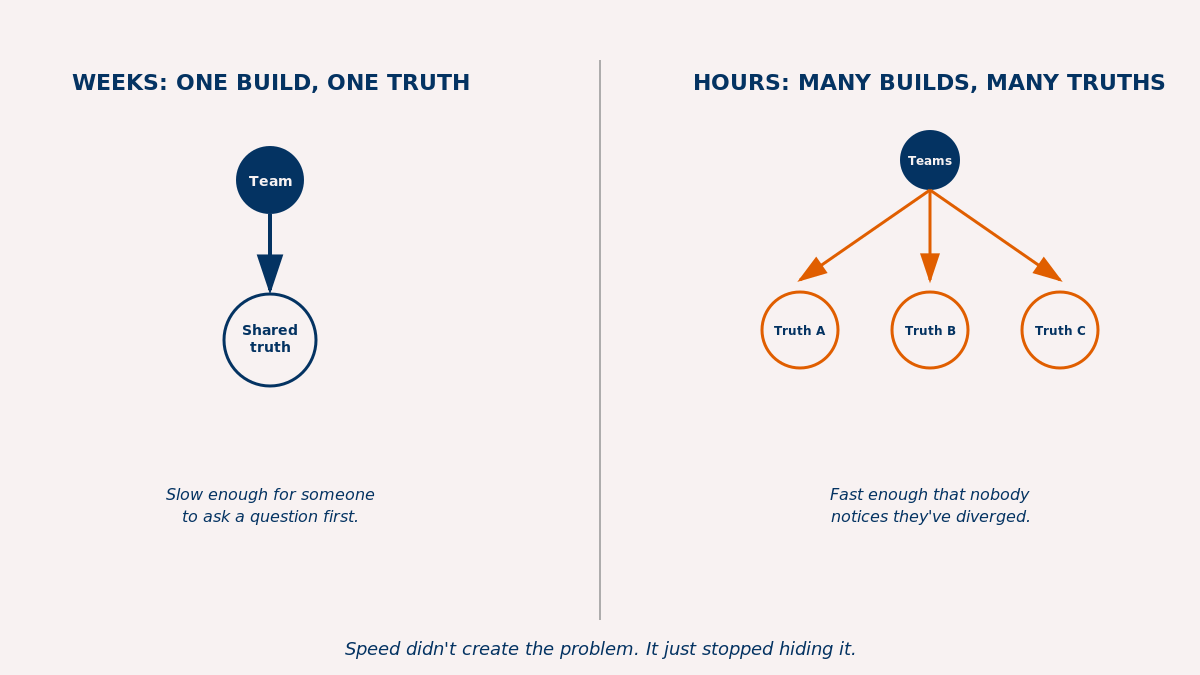
Why does this matter now? When building something took weeks, the bottleneck was implementation or getting the thing made at all. At hours, the bottleneck shifts from bandwidth to consistency. Every team can now build its own version of anything, fast. This sounds like flexibility, but is actually the quickest route to entropy: each team's data quietly becomes its own private ecosystem, with its own definitions, its own source of truth, its own private assumptions about what a number even means. Hand everyone a nail gun and skip the blueprint, and you'll get a house fast. Just not one anybody should live in.
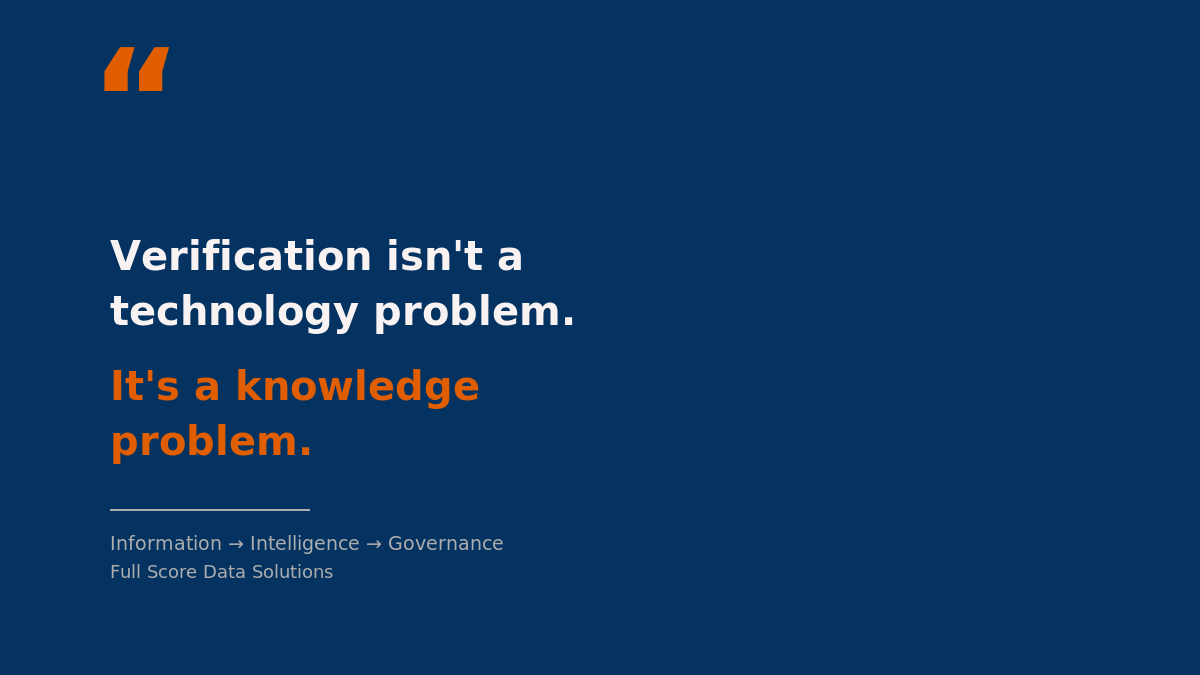
This is not another "AI needs governance" post. Every vendor in the market has written that post, and they are all, structurally, the same. Our philosophy is different. Verification isn't a technology problem. It's a knowledge problem; most people checking AI's answers were never given the truth to check against.
Call to Action
If your team is checking AI's answers against a truth they were never given, let's talk about encoding it up front instead. Reach out to us directly at contact-us@fullscoredata.com.
Navigate the Full Score Data Solutions Creativity Through Constraint blog series:
Part 4: Information → Intelligence → Governance (Current)
👉 Stay tuned for Part 5
