

7 Data Strategy Mistakes Killing Your ROI (and How to Fix Them)
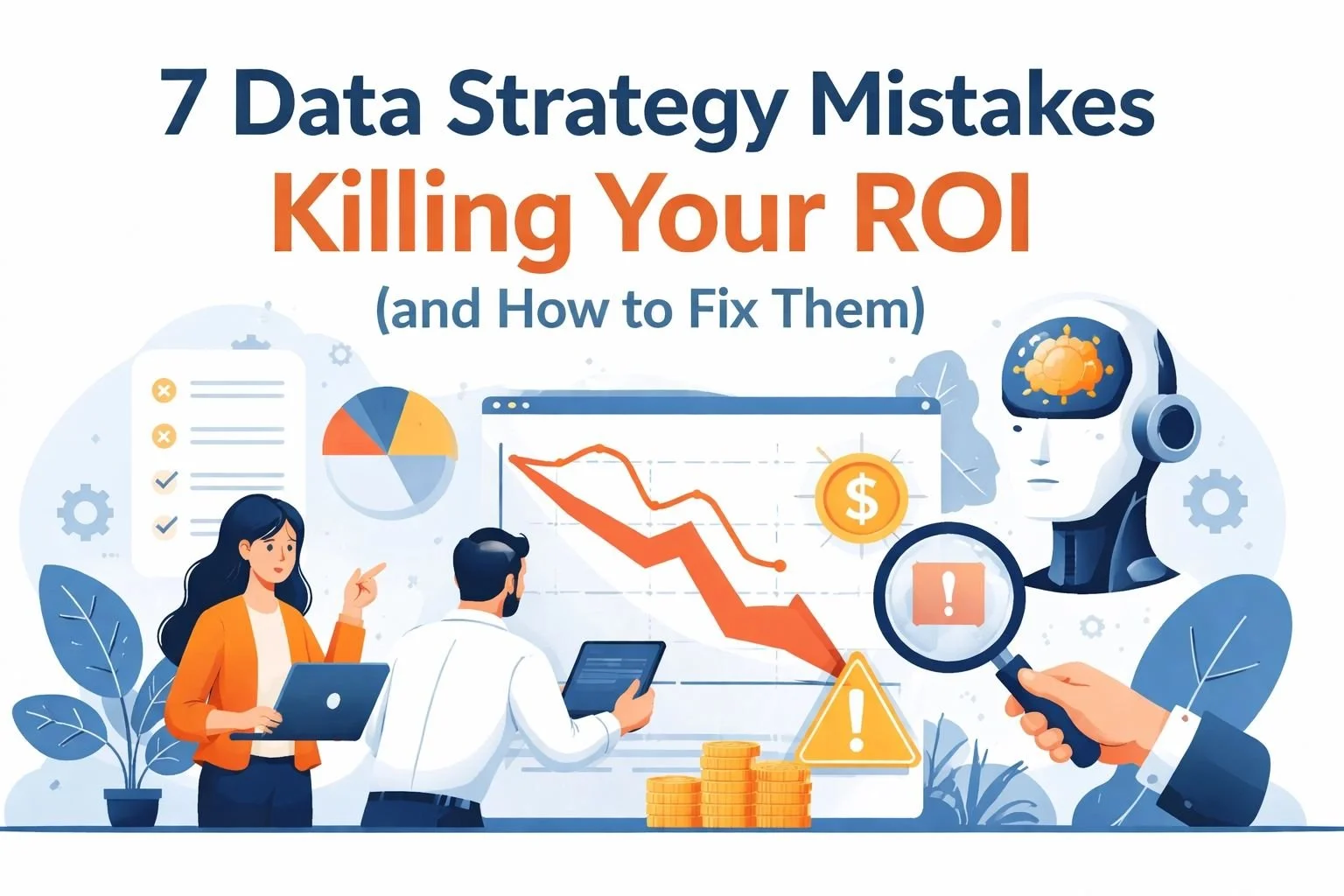
Here's the hard truth: most “AI” investments fail long before you ever touch a model. Not because the technology doesn’t work: but because the data foundation underneath it is shaky.
I’ve seen it happen a lot. A company gets excited about AI, launches a few projects, and twelve months later? They’ve burned through budget with little to show for it. The tools work fine. The people are smart. But the ROI never materializes.
The problem usually isn’t “lack of AI.” It’s data strategy, architecture, and governance.
If you’re not seeing returns from analytics, reporting, or any future AI plans, chances are you’re making one (or more) of these seven mistakes. Let’s break them down: and more importantly, let’s fix them.
Mistake #1: Treating Data as an IT Project
If data “belongs to IT,” it usually won’t create business value. It gets dumped into the backlog alongside software upgrades and infrastructure tickets. It becomes plumbing work instead of a growth lever.
Here’s the thing: data that lives in silos rarely touches the decisions that run the business. It turns into reports that nobody trusts instead of insight you can act on.
The fix: Tie every data initiative directly to measurable business outcomes. Before you greenlight anything, ask: What specific, expensive problem does this solve? If you can’t answer that clearly, you’re not ready to build.
Executive sponsorship matters here. Without alignment at the top, data programs drift. They lose funding. They get deprioritized when budgets tighten. Get leadership bought in on the business case: not just the platform.
For more on this, check out our thoughts on putting strategy before shiny objects.
Mistake #2: Ignoring Data Quality and Governance

You can’t build a skyscraper on sand. And you can’t build reliable growth decisions on messy, inconsistent data.
When quality is low and ownership is unclear, the impact shows up everywhere:
Leaders argue about whose numbers are “right”
Teams waste hours reconciling spreadsheets
Automation breaks because inputs aren’t stable
Your “AI future” becomes a pile of one-off experiments
The fix: Invest in governance as a core operating capability. That means:
Clear data ownership (who is accountable for customer, product, finance, etc.)
Common definitions (“What counts as churn?” “What is a qualified lead?”)
Quality controls (monitoring, validation, and issue workflows)
Access rules that balance speed with security
I’ve learned that companies who skip this step always pay for it later. Either analytics becomes untrusted, or worse: it becomes trusted while being wrong.
If you're wondering where to start, data maturity matters more than AI. Get your foundation right first.
Mistake #3: Building One-Off Solutions Instead of a Scalable Data Architecture
If every new dashboard needs a new pipeline, you don’t have a data platform—you have a collection of projects. Each one shows promise. None of them scale cleanly.
This is architecture drift. Scattered builds that never connect to core operations. They drain budgets without delivering compounding value.
The fix: Commit to a reference architecture that can scale across teams and use cases. Start simple, but design for reuse:
Standard ingestion patterns (batch/stream where it actually matters)
A governed transformation layer with shared definitions
A semantic layer (or metrics layer) so KPIs aren’t re-built every time
Clear environments and deployment practices so changes don’t break everything
I’ve learned the fastest teams aren’t the ones shipping the most one-offs. They’re the ones building repeatable patterns.
Mistake #4: No Clear ROI Measurement
This one drives me crazy. Companies invest in data platforms, reporting tools, and dashboards for months—and then can’t tell you whether any of it made the business better.
If you can’t measure success, you can’t prove value. And if you can’t prove value, good luck getting budget for the next phase.

Here’s where it gets tricky: data work often creates “invisible wins.” Less rework. Fewer meetings. Faster decisions. But if you don’t measure it, it doesn’t count.
The fix: Pick one or two north-star metrics per initiative before you launch. Could be:
Cycle time reduction (quote-to-cash, month-end close, onboarding)
Cost per transaction (support tickets, claims, refunds)
Conversion rate improvement (lead-to-opportunity, cart-to-checkout)
Error rate decrease (returns, duplicate records, compliance issues)
Baseline everything. Then track relentlessly. Don’t ask “Did we build the dashboard?” Ask “Did the decision get faster, cheaper, or better?”
Mistake #5: Tool Sprawl Without Integration Standards
New data tools are launching every day. It’s tempting to grab a few: a new BI tool here, a reverse ETL tool there, an AI model over here.
Before you know it, you’ve got a dozen tools that don’t connect cleanly. Fragmentation kills adoption. People don’t use systems they don’t trust—or can’t access in the flow of work.
The fix: Create a simple integration and platform standard. Ask yourself:
What’s our system of record for key domains (customer, product, finance)?
What’s our system of insight (where metrics are defined and consumed)?
What’s our system of action (CRM/ERP/support tools) and how do we feed it?
Who owns each tool, its costs, and its outcomes?
Buy platform capabilities for integration and orchestration. Build only what’s truly unique. And make sure every tool fits a clear place in the architecture.
Mistake #6: Skipping the Semantic Layer (and Letting KPIs Multiply)
If every team defines metrics their own way, your business will never agree on reality. Revenue, churn, pipeline, margin—each becomes a debate instead of a decision.
This is one of the quietest ROI killers I see. Not because the data isn’t there. But because the meaning isn’t consistent.
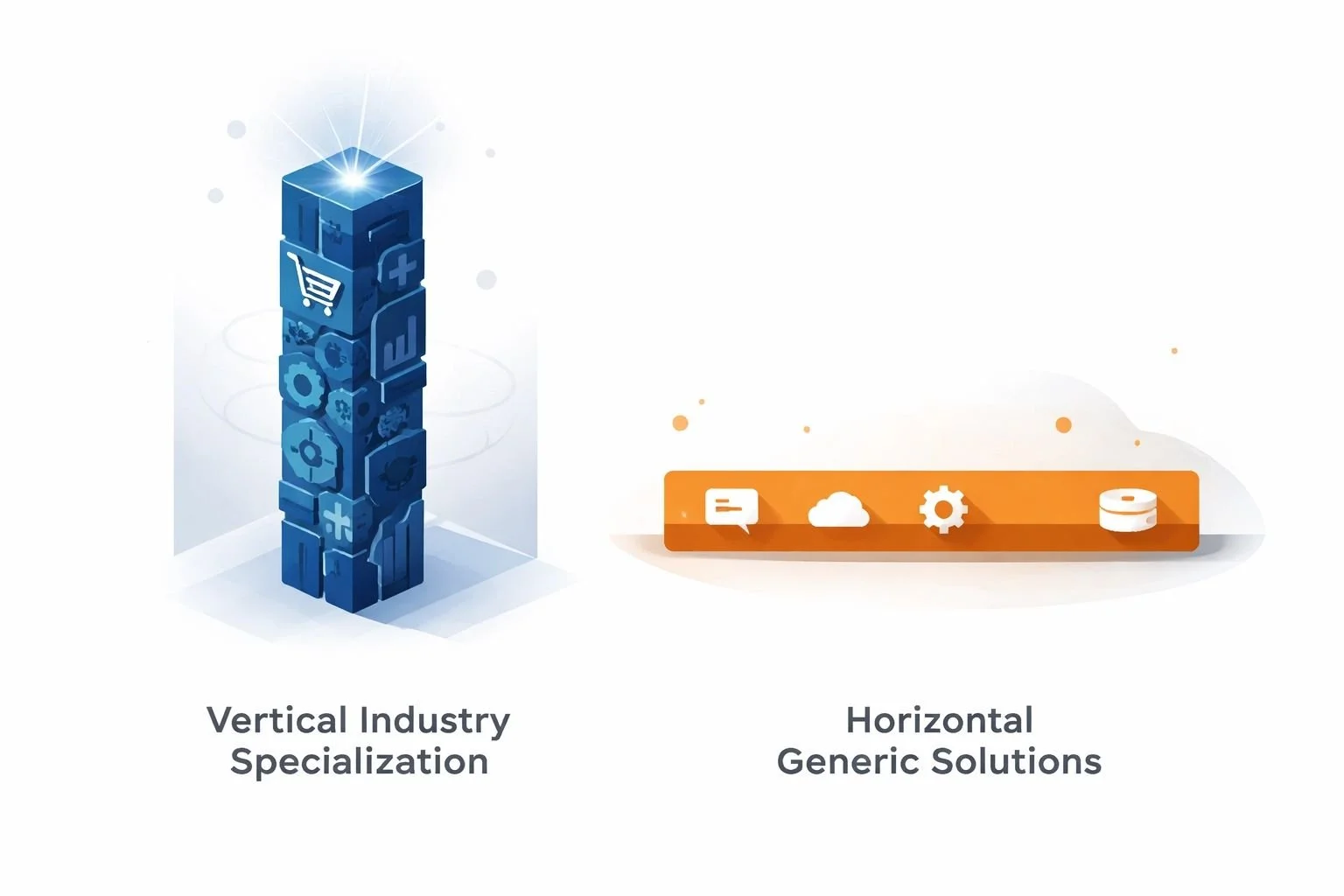
The fix: Establish a shared metrics and definitions layer—sometimes called a semantic layer, metrics store, or governed KPI catalog. The label doesn’t matter. The outcome does:
One definition of core KPIs
Reusable logic across reports and tools
Less time “reconciling,” more time acting
Here’s the kicker: this is also the baseline for any advanced analytics or future AI. Models can’t learn from ambiguity. And leaders can’t run a company on it either.
Mistake #7: Neglecting Data Governance as a Living Operating Model
You can have the best architecture in the world. If nobody knows who owns what, how definitions change, or how access is approved, it won’t stick.
Weak governance doesn’t look dramatic. It looks slow. Slow decisions. Slow onboarding. Slow fixes. And lots of “shadow data” outside the system.
The fix: Treat governance as a practical operating model, not a policy binder:
Define data owners and stewards for core domains
Set lightweight change control for definitions and pipelines
Make access requests simple, auditable, and fast
Create a recurring forum where business + IT resolve data issues together
I’ve had to learn this one the hard way: governance isn’t bureaucracy when it’s done right. It’s how you move faster without breaking trust.
And it’s the baseline for advanced analytics and future AI. Clear ownership and consistent meaning come first.
The Bottom Line
Most “AI failures” aren’t AI failures. They’re data foundation failures.
The companies that win build strong data strategy, architecture, and governance first—then layer on analytics and AI. Don’t ask “What AI tool should we buy?” Ask “Do we trust our data enough to run the business on it?”
If you’re making any of these seven mistakes, the good news is they’re all fixable. Start by picking one. Address it. Then move to the next.
Bad data foundations don’t just block AI. They block growth, efficiency, and confident leadership decisions.
