
Who we are
A small network of senior data and AI specialists, hand-picked for the work and led by one accountable partner. We work in private equity, healthcare, and logistics.
A bigger firm made our argument for us
At a private equity firm:
Them
An offshore team
Eight people, producing work nobody could use.
Us
We cleared them out
And held the whole thing up.
Them
The client bet bigger
A consulting firm three times our size took over.
Them
That firm failed
Six months later, we were cleaning it up again.
Us
Today
The three-person team we built carries the work as the client's long-term strategic partner.
We don't claim that big, junior, offshored teams fail. We replaced one that did, and then watched a bigger one fail in our place.
How we're built
Senior specialists, not headcount
Thirty-year DBAs and seasoned engineers, brought in exactly where the work needs that depth. No bench, and no junior team learning on your dime.
One accountable partner
Every engagement runs through Tom McCullough, our founder, who owns the outcome end to end and hand-picks the people who do the work.
Small on purpose
The proof of a well-architected system is that it doesn't take many hands to run it. A small firm making that argument isn't apologizing for its size. It's the demonstration.
How we work: Relationships Over Inventories
Most data organizations build inventories when what they need is relationships. An inventory tells you what data exists: which tables, which fields, which systems. It doesn't tell you how any of it connects, to each other or to the people relying on it.
That missing map, not a missing table, is the root of almost every symptom a data org has: the report nobody trusts, the number that needs three people to verify it, the AI tool nobody dares hand a real decision to.
So we don't start by cataloguing what a firm already has. We decide three things at the top, before anything gets built:
- Governance
- Over how AI gets used, not just who can access what.
- Identity
- One resolved answer per entity, decided once at the door.
- Correctness
- Caught at the source, before anything downstream depends on it.
Three constraints, chosen deliberately. Not architecture for its own sake. The system flags what's off, a person decides what ships, and the people who used to spend their week assembling inputs get to do the work they were hired for.
Why "Full Score"
A full score is the conductor's copy of a piece: every instrument's part on one page, so one person can see how it all fits and answer for the whole performance. The name is a nod to where Tom comes from. He holds a doctorate in music theory and composition, performed professionally as a cellist, and taught and chaired a university music department. That isn't a bio note. It's where he learned the idea this firm runs on, and then found again in every craft he took up.
01
Composition
The constraint generates the work.
02
Cello
The notes are fixed. All the freedom lives in how you play them.
03
Furniture
The grain doesn't care what you wanted. Fight it and it breaks.
04
Data
Same law, new material.
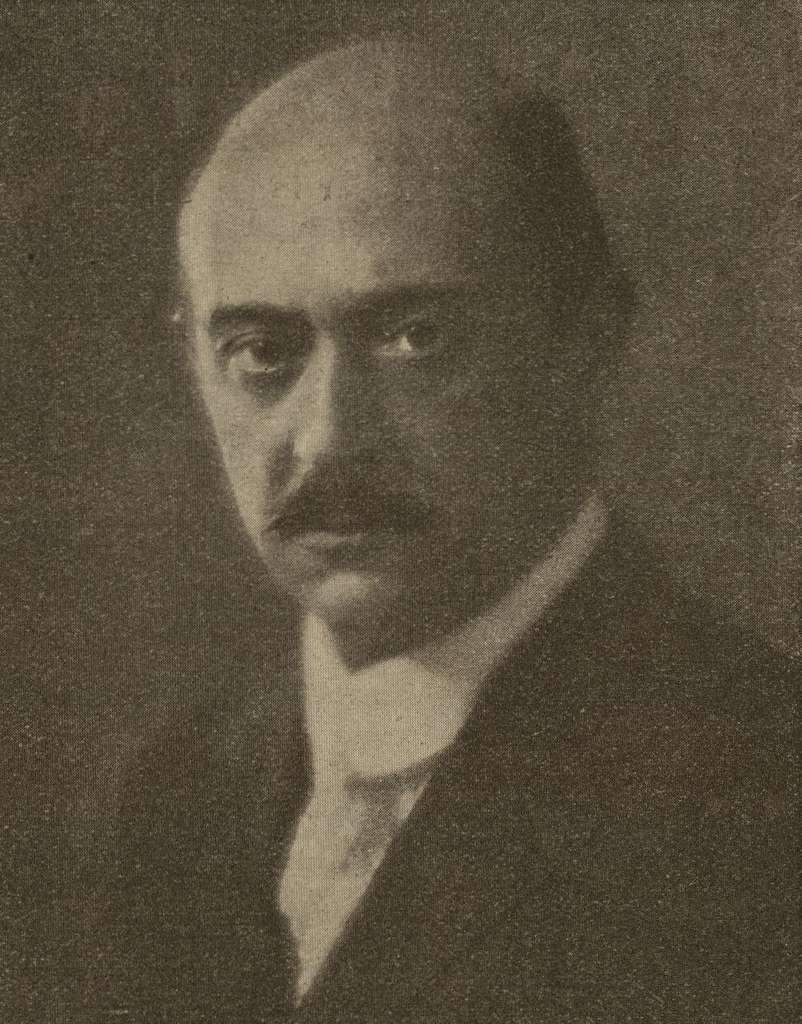
When late Romantic harmony drifted until every composer was writing in a private language, Schoenberg's answer wasn't more freedom. It was a harder rule, the twelve-tone row, and Berg wrote achingly lyrical music from inside it.
Build fast without shared constraints and every team's data drifts into its own private language. That's Schoenberg's problem, a century later.
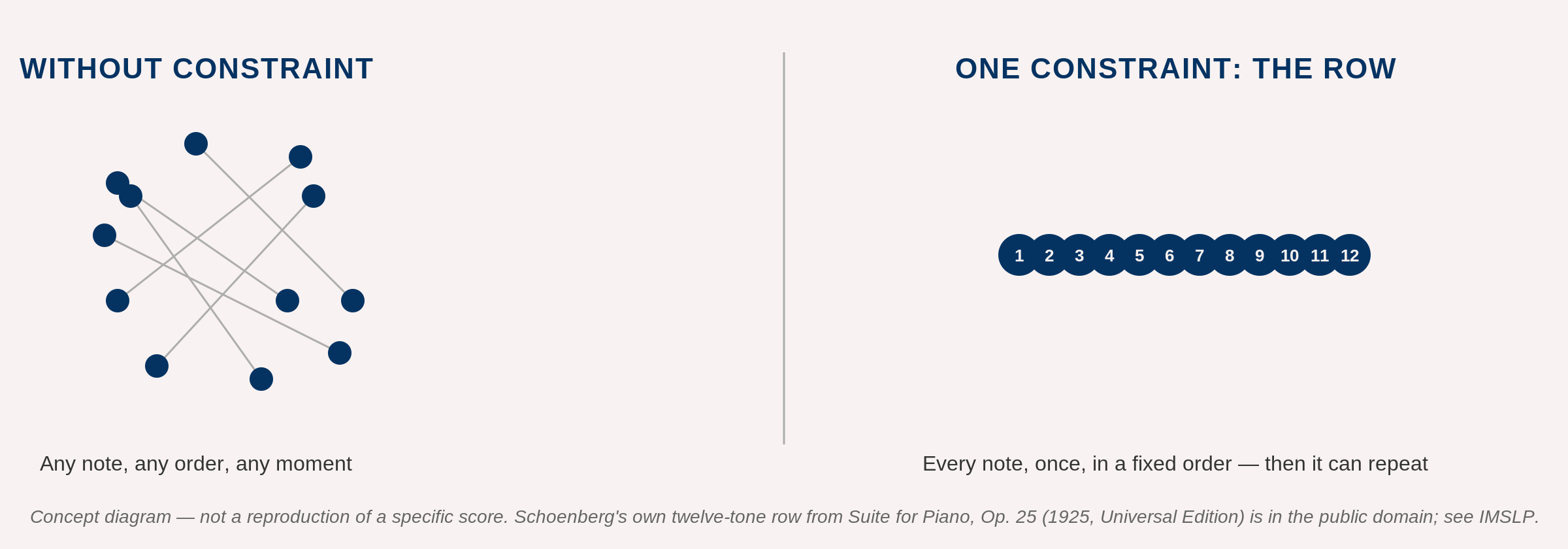
Watching the same pattern surface in client data work made it unmistakable enough to name:
Creativity Through Constraint.
Not a phrase borrowed later for a pitch deck. The name the pattern had been waiting on.